



It’s 2005. I’m walking to the Uk de Zon daycare center on Achtergracht in Amsterdam, about a ten-minute walk from our home on Utrechtsedwarsstraat. I’ve walked this route countless times, crossing diagonally across Frederiksplein, past the familiar facades of the city. This is the place where our oldest son played happily for years. He’s now attending elementary school in the neighborhood. Now I’m walking that same route, which has become second nature to me, but this time for his younger brother, who is now two years old.
It’s spring—that lovely, mild weather when the city slowly awakens. The trees along the canal are thick with buds; you know they’ll burst into a dazzling display of fresh green foliage in no time. Everything exudes promise, routine, and predictability.
I walk into the daycare center and head up the stairs to the first floor. Aidan’s beaming face when he spots me is, as always, a wonderful moment that instantly pushes the worries of the day into the background. Only this time, I don’t take him home right away. One of the childcare staff asks if I can come sit down with her for a moment. It was supposed to be a brief conversation, but it turned out to be a meeting that would turn our family life upside down forever.
“Do you have a moment? I’d like to discuss something with you,” she begins cautiously. “We’ve noticed recently that Aidan is developing differently than other children his age.” She then gives a number of specific examples that support her professional intuition.
It was behavior I had never really noticed at home until then. And why would I? As a parent, you understand your child inside and out. You’re so deeply connected that you instinctively sense what he needs, even before he knows it himself. You pick up on the tiniest cues, naturally adapt to his needs, and understand exactly what he means—even if he hasn’t yet put his inner world into words. In the safe, familiar bubble of our family, there simply was no “unusual” behavior. There was only Aidan, and the way he acted was the most normal thing in the world to us. Until someone from outside presented us with a different perspective.
“We could have him evaluated by a developmental psychologist,” she suggests. A what? How? The ground seems to give way beneath my feet, and I only catch half of the question with which she concludes her story: “Do you agree to that?”
Of course, we agreed. But the moment I walked down the stairs of the Achtergracht that afternoon with Aidan in my arms, the world had changed, and our unpredictable journey began.
No concessions
Although we had no idea at all what exactly was different about Aidan’s development, Andrew and I knew right away: we weren’t going to make any concessions in our lives. With a busy theater company, a large circle of friends, and family in America, our lives were a constant stream of activities, trips, and events. “We’re going to take Aidan everywhere with us and see how far we get,” we said to each other. A mix of the optimism that characterizes us and total ignorance, of course.
On the journey that followed, we saw that Aidan—given his now-diagnosed autism—actually had a tremendous need for rituals and routines. But then again, life just can’t be scripted. That’s when I came to firmly believe that flexibility is a muscle you can train.
As parents of a child on the autism spectrum, the instinct to cling to a rigid structure makes perfect sense. You want to protect them and build a safe cocoon where no unexpected storms arise. But if we anxiously ward off every change and every ripple in the water under the guise of “don’t rock the boat,” that muscle will never get the chance to grow stronger. We create a kind of false sense of security. We may keep today calm, but in doing so, we unintentionally make their world microscopically small. It doesn’t prepare them for a society that will later be big, loud, and completely unpredictable. If we don’t teach them now to be a little flexible, how will they stay afloat when the wind suddenly shifts later on?
From Behind the Scenes to the Big Stage
When I look at Aidan now, I see just how essential that training has been. He’s 22 years old now and works as an usher at the door of the Carré theater in Amsterdam, scanning tickets. He welcomes complete strangers, strikes up a conversation, connects with the audience in a flash, and stands there, whistling, right in the midst of the hustle and bustle of a packed theater lobby.
Now, I realize full well that this level of self-reliance and intense social interaction is certainly not achievable for everyone. Every child has their own pace and their own limits. But I do think that if you keep flexibility in mind, you can always make much more progress than you might expect. Because believe me: the idea that Aidan would one day become the face of the Netherlands’ most iconic theater was the very last thing I would have imagined that morning on the Achtergracht.
It takes courage to keep your child’s future self in mind when making decisions today.
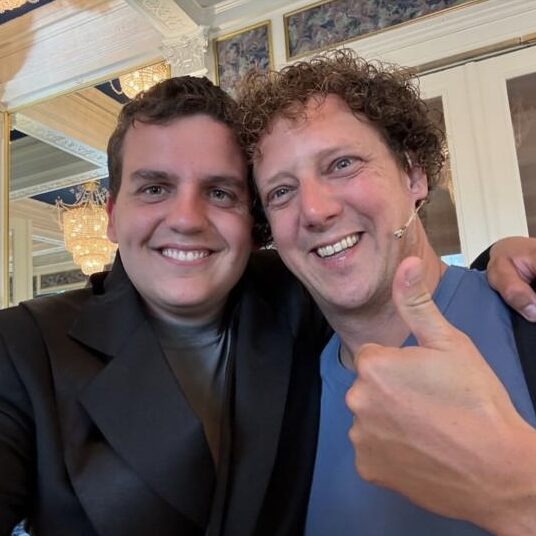
It means that sometimes you have to dare to stretch your patterns in a playful way and take that step outside your comfort zone. Yes, that might cause a little more stress or make you break a sweat today. But by focusing on concentration, unconditional love, and a clear long-term vision, you’re laying a foundation that will benefit them for the rest of their lives.
We need to dare to think bigger for our children. Let’s stop just shielding them from the outside world, and instead, step by step, help them develop the resilience and social confidence to discover that world for themselves. My guiding principle in this has always been this mantra:
“If you treat a child as he is, he will remain that way, but if you treat him as you want him to become, you’ll help him on his way there.”
That muscle is there. Let’s keep working on it together.
About Saskia Maas
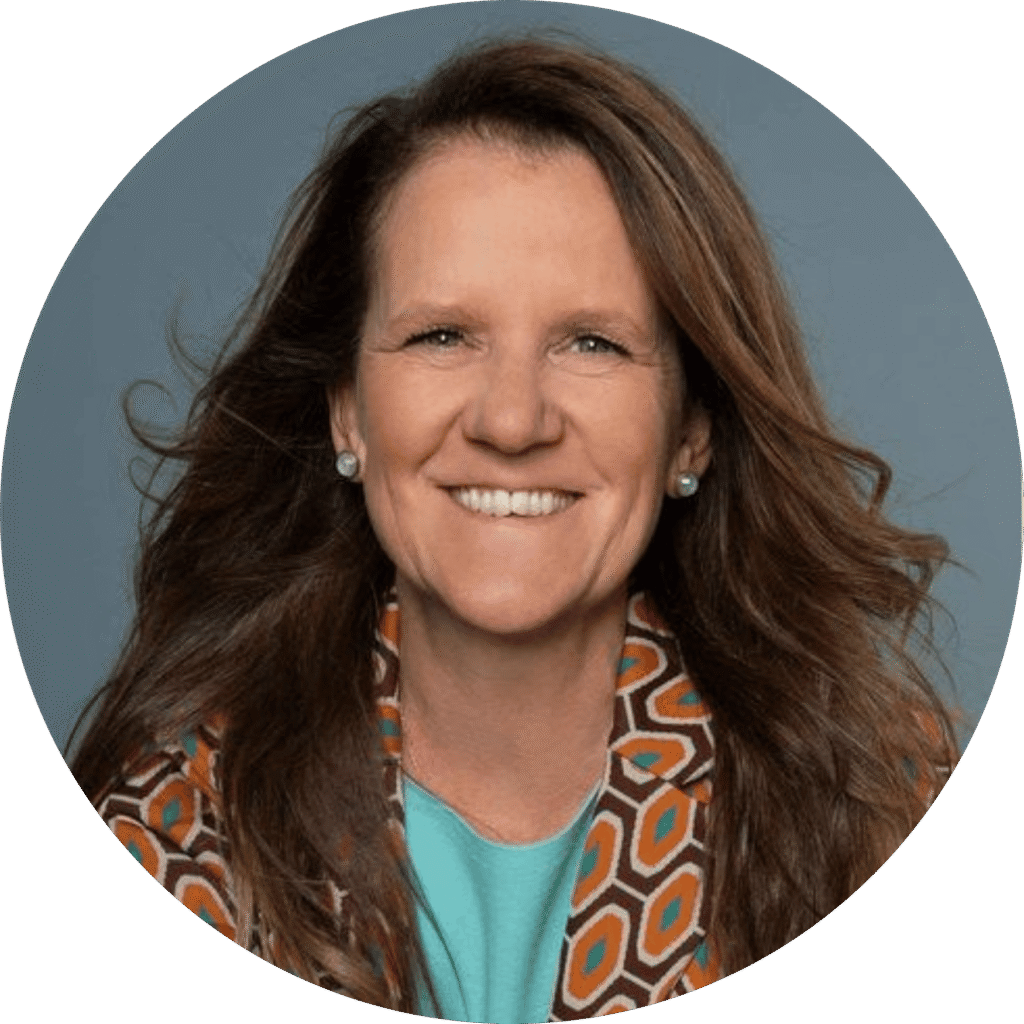
Saskia Maas is co-founder and director of Stichting InterActing, a theater school that helps young people with autism increase their social flexibility through improvisational theater. She is also CEO of Boom Chicago (the international comedy institute and theater-venue in Amsterdam) and the founder of Falcon Artists (an agency focused on managing and developing creative talent). A proud mother of her sons Finn and Aidan (who herself has autism), she combines her experience in the theater world with her personal mission to look for opportunities, develop talent and celebrate unique, colorful brains.